



Author’s Note
This reflection marks nearly thirteen years since my wife, Mina, and I first came to Cambridge with a simple question: could something that had disappeared be built again?
What began as a gentle enquiry became a sustained act of commitment—one shaped not by immediate validation, but by continuity, adaptation, and an enduring relationship to the work itself. Over time, that work extended beyond instruction into community life, academic spaces, and moments of recognition that were never sought, yet carried meaning.
This essay is not a retrospective in the conventional sense. It is, however, an attempt to render visible what often remains unseen: the long arc between decision and consequence, between building and being tested, between loyalty and the deeper responsibility of stewardship.
The more expanded version of this reflection will appear as part of Elegant Transitions, a forthcoming work exploring the movement from inherited structures toward consciously chosen paths of alignment and service.
It is written with the understanding that what appears stable is often the result of years of unseen effort—and that what endures does so not by circumstance, but by choice.
—Baruti KMT-Sisouvong, PhD
Thirteen years ago this weekend, Mina and I arrived in Cambridge during Spring of 2013 with a question that did not announce itself as consequential at the time:
Is it viable to rebuild something that has already disappeared?
The Transcendental Meditation program had been absent from Cambridge for sixteen years. What remained was not a structure, but a memory—faint, dispersed, and without continuity. We were not stepping into an established center, nor inheriting a functioning system. We were being asked, in effect, to begin again.
There had been encouragement—direct assurances that support would be present if we chose to come—but encouragement is not infrastructure. It is not revenue. It is not the daily work of meeting people where they are and guiding them inward, one instruction at a time. And so, when we visited during Spring Break of 2013 after a two-day drive from our campus in Iowa, we did what one does when the path is unclear: we walked, we listened, we observed. We allowed the place to reveal itself slowly.
Cambridge does not yield easily. It is a city that tests ideas by proximity alone. To remain here requires more than belief; it requires substance. And somewhere between those walks, those conversations, and the long drive back to Iowa, we made a decision that, in retrospect, contained far more than we could have known at the time.
We decided to bet on ourselves.
We arrived on Friday, 31 May 2013 and began with what was available: our training, our discipline, and a willingness to work without immediate validation. There was no momentum to inherit, no audience waiting. There were only individuals—each with their own reasons for seeking something less cacophonous, something deeper, something not easily named.
And so we began there.
After initially securing a Central Square location for the new center only to have to abandon said plans and negotiate with the owner of the space to cancel the lease after a few months of remittances and meetings with architects, alongside several weeks of Introductory Talks held at Cambridge YMCA, we scheduled our first series of Personal Instructions with the first being the evening of Wednesday, 16 October 2013.
What followed were years that, from the outside, would appear uneventful. There were no large announcements, no rapid expansion, no visible markers that something significant was underway. There was simply the work. One person at a time. One instruction at a time. One life changed at a time.
This is the phase that rarely enters public narrative. It is too slow to be compelling, too subtle to be amplified. But it is also the phase upon which everything else depends. Trust is not built through claims; it is built through repeated, consistent experience. Presence is not established through visibility; it is established through continuity.
Over time—slowly, almost imperceptibly at first—something began to take shape. Individuals returned. Others arrived, often through word of mouth, carrying with them the subtle evidence of lived benefit. The work deepened. The rhythm stabilised. What had begun as an enquiry became a practice. What had been fragile became, over time, reliable.
We remained.
That word, I have come to understand, carries more weight than it first appears. To remain is not simply to stay in place. It is to continue under conditions that do not always affirm your decision. It is to hold steady when the external indicators of progress are inconsistent or delayed. It is to build something whose value may not be immediately recognised, even as it is silently transforming the lives of those who encounter it.
Harvard Divinity School
There are moments, along any sustained path, when the work crosses a threshold from private continuity into public recognition. Not as spectacle, but as acknowledgement.
One such moment arrived in 2017, when I was invited to sit on a panel connected with Harvard Divinity School.
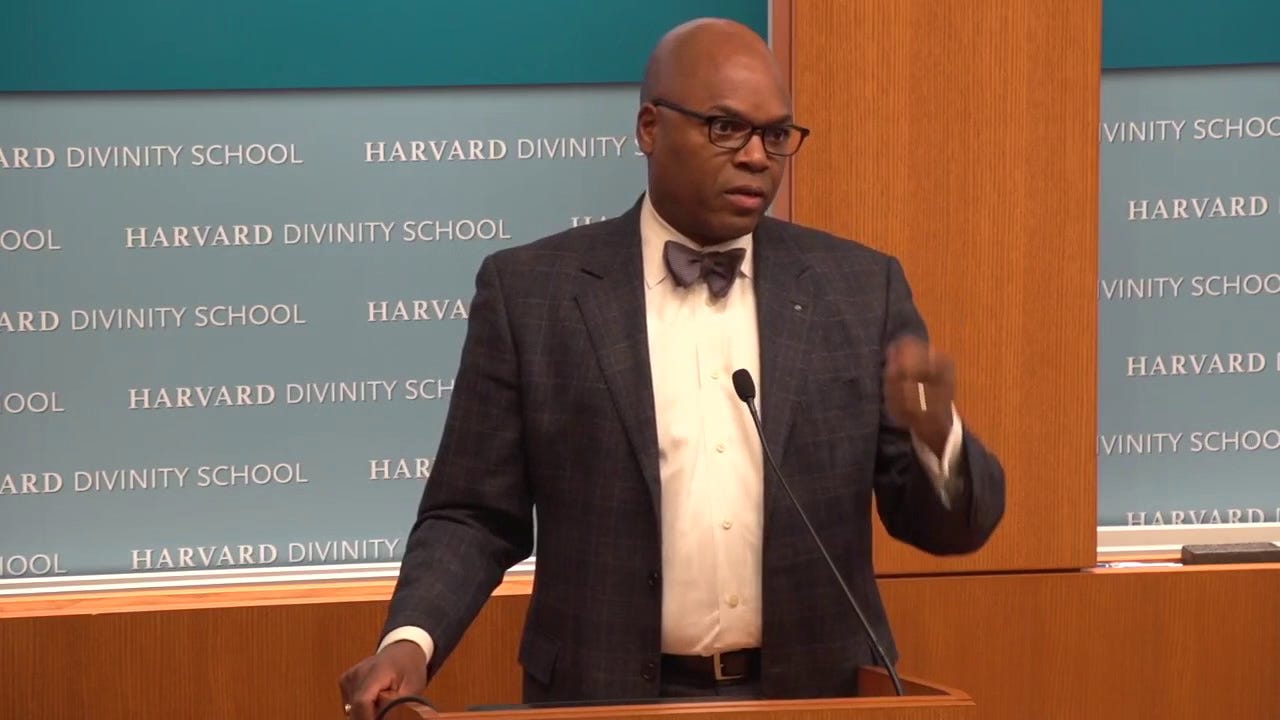
It was not something I had pursued. There had been no campaign for visibility, no effort to position myself within academic circles beyond the work itself. And yet, over time, the presence we had established in Cambridge—through teaching, through conversation, through the steady integration of practice and enquiry—had begun to register beyond the immediate sphere of those we served.
To be invited into that space was meaningful, not as a personal milestone, but as an indication that the work had become legible within one of the most rigorous intellectual environments in the world.
Harvard Divinity School is not a place that entertains ideas lightly. It is a place where traditions are examined, where claims are interrogated, where experience must stand in relation to scholarship. And so, to sit on that panel was to participate in a broader conversation—one that extended beyond technique, beyond organisation, into the deeper questions of consciousness, practice, and human development.
What struck me most was not the prestige of the setting, but the continuity of the work itself. The same principles that guided a one-on-one instruction in a modest room in Cambridge were present in that space. The same commitment to clarity, to experience, to careful articulation.
Nothing needed to be added.
Nothing needed to be adjusted.
The work held.
And in that moment, something became clear: what had been deliberately built over time was not confined to a single structure or location. It was portable. It could enter any room—academic, professional, or personal—and remain intact.
That recognition did not change the work.
It confirmed it.
Winthrop House
That participation extended beyond a single invitation.
For three years, Mina and I served as Non-Resident Tutors at Harvard University’s Winthrop House—an experience that deepened our engagement with the intellectual and communal life of the university in ways that continue to resonate.
The role of a tutor within Harvard’s residential system is not merely administrative. It is relational. It calls for presence, discernment, and the capacity to support students as they navigate both academic rigour and personal formation. Within that context, we had the opportunity to help cultivate spaces where enquiry, reflection, and lived experience could meet without reduction.
One evening in particular remains vivid.
In February 2017, we hosted Professor John Jennings—nationally recognised artist, scholar, and New York Times bestselling graphic novelist—for a conversation in the Senior Common Room of Winthrop House. The focus of the evening was his graphic novel adaptation of Octavia Butler’s Kindred, a work that, in its original form, had already established itself as a powerful exploration of memory, history, and the enduring imprint of racial experience.
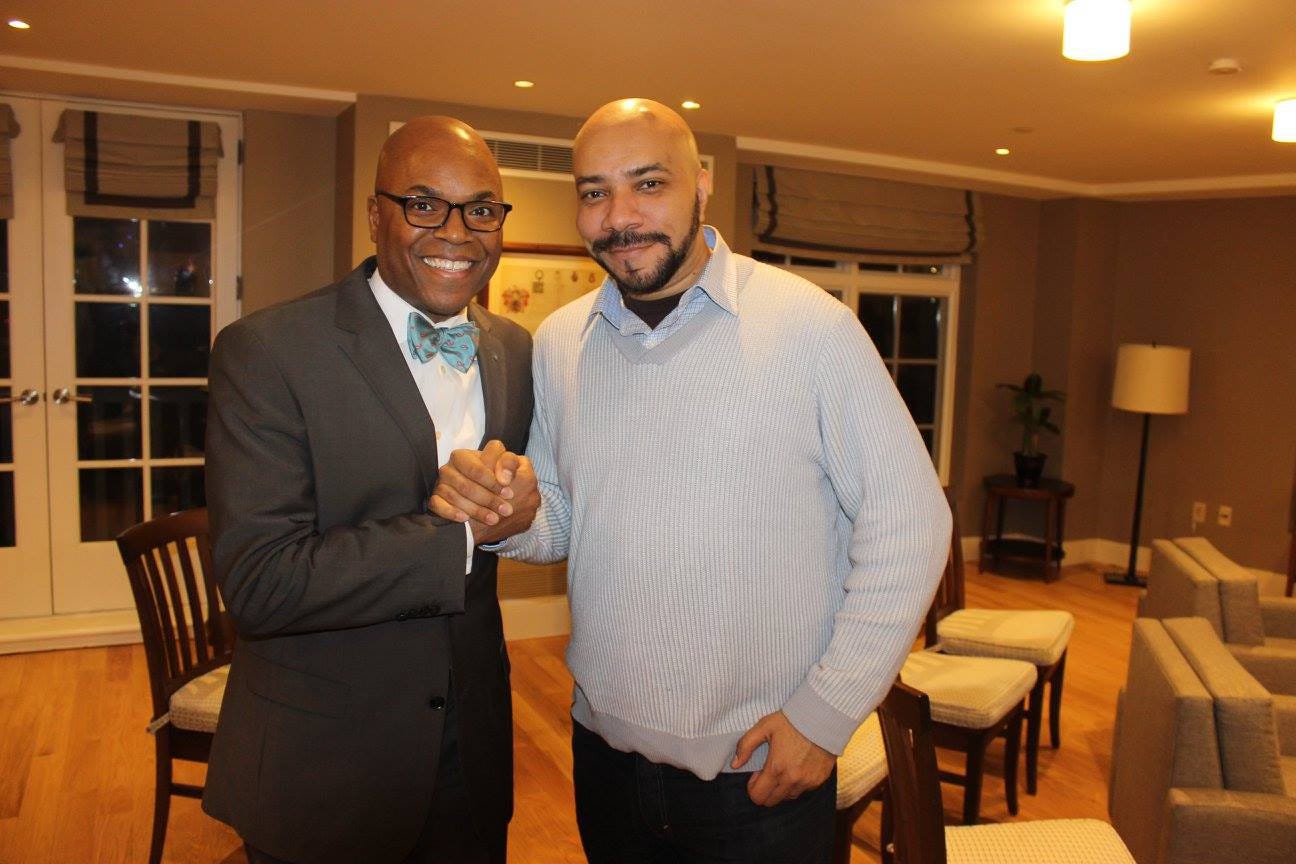
What unfolded that evening was not a lecture.
It was a conversation—wide-ranging, attentive, and grounded in mutual respect.
Students, fellows, and guests gathered in a space that allowed for proximity rather than distance. Professor Jennings spoke not only about the technical aspects of adaptation, but about the ethical dimensions of the work: what it means to translate a text so deeply rooted in historical trauma into visual form, and how an artist carries responsibility not only to the source material, but to the communities whose histories it reflects.
The discussion moved fluidly between visual literacy, storytelling, authorship, and the role of the artist as both interpreter and witness. Students engaged directly, asking questions that revealed both intellectual seriousness and a willingness to grapple with complexity rather than retreat from it.
What struck me most, then as now, was the atmosphere.
It was rigorous, but not rigid.
Scholarly, but not detached.
Personal, without becoming unstructured.
It reflected something essential about the residential college tradition at its best: the capacity to hold space for ideas that matter, while remaining attentive to the people engaging them.
For us, that evening was not an isolated success. It was emblematic of a broader commitment—to contribute, in whatever ways we could, to the intellectual and cultural fabric of the community we had come to serve.
And, as with the work in meditation, the principles remained consistent.
Presence.
Clarity.
Care.
Nothing needed to be added.
The work held.
The Work Continues
In the years that followed, Mina and I had the privilege of teaching Transcendental Meditation to thousands of individuals across Cambridge and the greater Boston area. Each person arrived with a different story, a different threshold, a different readiness. Some came in moments of crisis. Others came out of curiosity. A few came in search of relief from chronic conditions‑both physical and related to the mind. In more than a few cases, many could not fully articulate why they had come at all. It did not matter. The work met them where they were.
From the outside, it might appear that this accumulation of effort would naturally lead to stability. That once the work had been established, the surrounding structures would align to support its continuation. That continuity, once demonstrated, would be met with proportional care.
But life has a way of revealing the difference between assumption and reality.
After years of building, the conditions surrounding the work began to shift—subtly at first, then with measurable consequence. Decisions made beyond our immediate field of influence began to alter the terrain upon which we had been operating for approximately a decade. A redesign of the national and local systems affected visibility and access in ways that were not immediately recoverable. A territorial reallocation reduced our reach. Another location was privileged in a manner that materially redirected the flow of prospective students.
The language used to describe these changes was measured. There was no indication of malice. And yet, the outcomes were not abstract. They were concrete, cumulative, and undeniable.
Over roughly two and a half years, the financial impact became unmistakable: Cambridge witnessed a shortfall of more than three hundred thousand dollars, of which our share would have amounted to roughly one hundred sixty-five thousand dollars in household income.
At a certain point, numbers clarify what gentler language cannot.
It is one thing to speak of purpose, of service, of contribution to the well-being of others. It is another to reconcile those ideals with the material realities that sustain a household. Rent does not respond to intention. Food does not arrive through conviction alone. Children do not experience stability as an abstraction.
And so, after more than a decade of consistent service—after years of showing up, of teaching, of building—we found ourselves standing in Housing Court, asked to account for how we had arrived at such a point.
It is a strange experience, to compress years of work into a narrative that must be legible within minutes. To explain, in a setting designed for resolution rather than reflection, that the situation before the court was not the result of neglect or indifference, but of a convergence of structural changes whose effects were borne locally.
And yet, even in that moment, something else was present.
Not panic. Not collapse.
Clarity.
Because when one has spent years building something real—something grounded in direct experience rather than projection—there is a stability that does not disappear when circumstances become difficult. There is an understanding, forged through repetition, that the work itself remains intact even when the structures around it shift.
We continued.
We continued to teach.
We continued to pay what we could, when we could.
We continued to build new pathways where old ones had narrowed.
We expanded into digital platforms. We developed new programmes. We began constructing systems that would allow us to speak directly to those seeking the work, rather than relying solely on channels that were no longer functioning as they once had.
This was not reinvention for its own sake. It was adaptation.
Resourcefulness is often romanticised as creativity. In practice, it is far more grounded than that. It is the capacity to generate viable alternatives when existing structures no longer support what must continue. It is the refusal to allow a single point of disruption to determine the trajectory of the whole.
And beneath this, there was a deeper shift taking place—one that had been forming for some time.
There comes a moment in any long commitment when loyalty must be examined. Not abandoned, not dismissed, but understood in its proper proportion. Early in one’s development, loyalty is essential. It binds individuals to shared purpose. It enables collective effort. It teaches discipline and care.
But loyalty, if left unexamined, can outlast its usefulness. It can persist beyond alignment, and thereby transforming from a virtue into a constraint.
The question, when it arises, does not announce itself loudly. It appears in moments of stillness, often when one is least prepared to answer it:
What am I sustaining now that no longer sustains me?
To ask this question is not an act of rebellion. It is an act of maturation. It marks the transition from obligation to stewardship—from maintaining a structure because it once held meaning, to discerning whether it still does.
What we have come to understand is that the value of this work does not reside solely in any institution, any designation, or any formal center. It resides in the lived experience of those who practise it. It resides in the imperceptible recalibration of nervous systems, in the clarity that emerges in moments of stillness, in the countless lives that have been touched in ways that cannot be easily quantified.
The work… remains.
Recognition, when it arrives, does not change this. Recently, I was honoured to be named among a small group of Transcendental Meditation teachers in the United States to receive a distinction that includes many who have been teaching for decades longer than I have. It is meaningful, certainly. But it does not alter the nature of what has been done.
If anything, it clarifies it.
Closing Reflection
Recognition does not create the work. It reveals that the work has become sufficiently stable to be seen.
And so, when I return in my mind to those early days—walking through Cambridge, asking whether this was possible—I see more clearly now what was not visible then.
We were not simply evaluating a location.
We were entering into a test.
Not of vision alone, but of endurance. Of whether we would continue when the conditions were uncertain. Of whether we would adapt when the structures shifted. Of whether we would remain aligned with the work itself, even when the surrounding narratives changed.
Thirteen years later, the answer is no longer theoretical.
We came here to build.
We stayed to serve.
And whatever is named, repositioned, or redefined around us, that fact remains unchanged.
In time, the distinction between what is sustained and what is described becomes clear—without the need for emphasis.
It is in that recognition that a deeper movement begins—not of abandonment, but of alignment; not of reaction, but of conscious transition—of repositioning.
So cultivate your mind. Do not fear the unknown. Continue refining your craft.
The world does not only need builders of the physical world.
It needs builders of consciousness—
and those willing to endure long enough to understand the difference.
Suggested Reflection
Take a moment to consider a commitment in your own life that has extended beyond its initial conditions.
Where have you continued, even when external validation was limited or delayed?
What have you built—quietly, consistently—that may not yet be fully visible to others?
Are there structures, roles, or agreements you are maintaining out of habit rather than alignment?
Sit with this question:
What am I sustaining now that no longer sustains me?
And then, just as importantly:
What remains, even when conditions change?
Allow the answers to arise without urgency.
Clarity, like any meaningful structure, is built over time.
—
About the Author
Dr. Baruti KMT-Sisouvong is a scholar of consciousness, researcher of human development, and Certified Teacher of Transcendental Meditation® based in Cambridge, Massachusetts. His work explores the relationship between Pure Consciousness, neuroscience, and social systems, and how deeper awareness can inform both personal growth and institutional transformation.
He is the Founder and Chief Meditation Officer of Transcendental Brain, an initiative examining the intersection of consciousness research, cognitive science, and high-performance decision-making. He is also President of Serat Group Inc. and Founder and Director of Radical Scholar Inc., a nonprofit dedicated to consciousness-based research and public scholarship.
Alongside his wife and teaching partner Mina, he co-directs the Transcendental Meditation program for Cambridge and the Greater Boston area. He is also the host of the On Transcendence Podcast and Founder of International Meditation Hour, a quarterly global gathering dedicated to the unifying power of silence.
His writings—spanning frameworks such as The Model for Perpetual Growth and Progress and The Seven Layers of Manifestation—explore the evolving relationship between consciousness, leadership, and society.
He writes from the conviction that the most important race is not between nations or machines, but between the conditioned mind and the awakening soul.
To learn more about him, visit: https://www.barutikmtsisouvong.com/.