


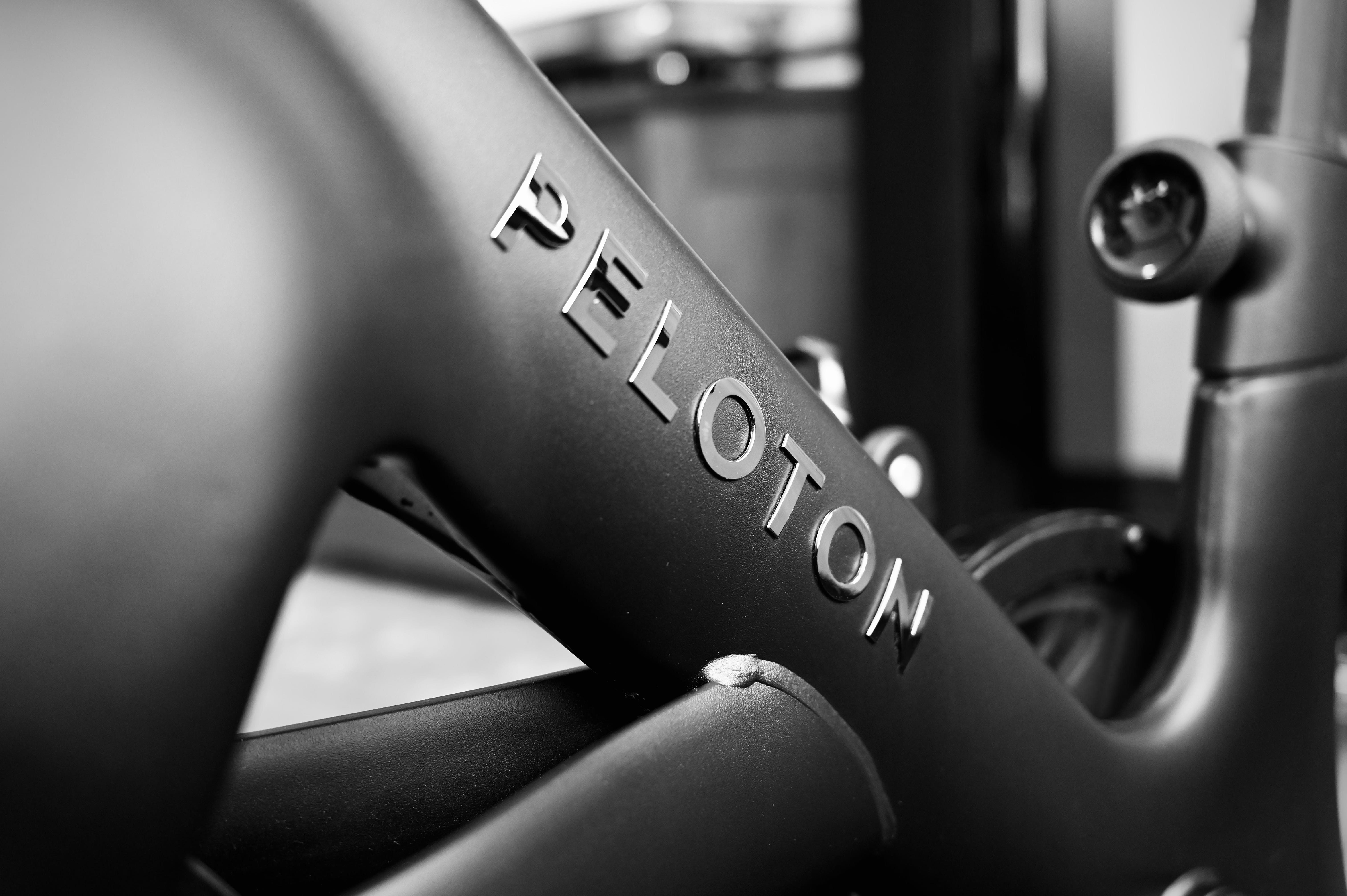
This morning, I completed my 1,500th ride on Peloton.
Two forty-five–minute Power Zone Endurance sessions.
Heart rate steady.
Breath calm.
Zone II.
This particular modality—introduced to me a little more than two years ago by a fellow Peloton rider, Gene Akers—has become less a training preference than a way of orienting myself to effort, restraint, and continuity. There were no fireworks this morning. No maximal output. No dramatic crescendo.
Just the work.
And, unexpectedly moving in its own quiet way, a stream of high-fives from among the more than two hundred riders taking the ride on-demand from points around the world—each of us, in our own context, choosing simply to show up.
Over the past five years, those 1,500 rides have accumulated into 19,223 miles and 1,054 hours of cycling—with a little more than the last two years intentionally lived in the unglamorous middle: the zone where nothing flashy happens, but where everything important is built. This remained true even on mornings when it would have been easier to stay in bed, or to forgo the session altogether.
Looking back across the arc of the journey, I remain grateful for the simple, repeated choice to ride on my scheduled days. Consistency, after all, often reveals itself most clearly in hindsight.
When the totals are surveyed plainly—1,500 rides, 19,223 miles, and 1,054 hours—the averages tell a quiet but instructive story:
Average per ride:
Distance: approximately 12.8 miles
Time: approximately 42 minutes
Average speed (across five years): approximately 18.2 mph
These are not the figures of episodic exertion or occasional intensity. They are the imprint of sustained effort, repeated often enough to become embodied.
As I have come to learn—particularly over these last two years of sustained Zone II training—this is not where we prove ourselves.
It is where we become ourselves.
And that restraint is precisely the point.
Zone II asks a deceptively difficult question:
Can you remain present without intensity to distract you?
There are no heroics here. You cannot sprint your way through Zone II without undermining its purpose. You must remain attentive, measured, patient. Over time, it rewards you—not immediately, but reliably.
In this, I am reminded of Jeff Olson, who in The Slight Edge (2013) quotes Ralph Waldo Emerson: “The only person you are destined to become is the person you decide to be.”
Each morning I slip on my Peloton cycling shoes while my family still sleeps, that decision is quietly reaffirmed. My commitment to remain as healthy as possible—mentally, physically, emotionally, spiritually—for my family has always been my primary motivation. In choosing this practice, each dimension of my work and service is strengthened by it. And it is a choice I intend to continue making, day by day, as I walk this plane of existence.
I have come to see Zone II heart-rate training as more than a training method.
It is a life posture.
In a culture obsessed with acceleration, outrage, and visible strain, Zone II represents a countercultural ethic: consistency over spectacle, coherence over drama, endurance over display.
Five Years of Returning
What the numbers do not show is what else was unfolding during these rides.
There were seasons of professional transition, institutional tension, family growth, intellectual labour, spiritual inquiry—and, more recently, material uncertainty. Through all of it, I returned to the bike not to escape, but to stabilise.
The discipline was never about dominance over the body.
It was about relationship with it.
Some days the output was strong.
Some days it was merely sufficient.
Not unlike Albert Camus’s Sisyphus, the practice was the return.
That, I suspect, is why so few accumulate this kind of mileage intentionally. Whether through regular Power Zone work or sustained Zone II heart-rate training—which has been my exclusive modality for a little more than two years now—the discipline demands a particular kind of restraint. Zone II requires resisting the urge to perform, both for oneself and for those who zip past on the leaderboard. It asks you to trust a process whose rewards are delayed, largely invisible, and cumulative by design.
Until they are not... invisible that is.
On Teachers and Quiet Guidance
I did not walk this path alone.
Peloton instructors such as Matt Wilpers—with whom I share an undergraduate alma mater—Olivia Amato, and Denis Morton have each, in their own way, modelled what it looks like to honour fundamentals without ego; to teach discipline without aggression, and effort without collapse.
Their coaching consistently points away from comparison and toward attunement. Toward knowing your zones. Toward respecting limits. Toward playing the long game.
That orientation matters—especially when the surrounding culture insists that if we are not exhausted, we are not trying hard enough.
A Quiet Milestone
My 1,500th ride was not a personal best.
It was not a peak performance.
It was something far rarer: a continuation.
In my experience, some of the most meaningful achievements arrive without applause. They are marked internally, registered in the nervous system, and carried forward as embodied confidence rather than stories told.
Zone II teaches you to trust accumulation.
Life, it turns out, asks the same.
Closing Reflection
There is a particular clarity that comes from staying with a practice long enough to see beyond novelty and struggle. What remains is not bravado, but steadiness. Not urgency, but orientation.
And perhaps this is the quiet lesson of 1,500 rides:
The work that changes us most rarely announces itself.
It simply waits for us to return—again and again—until we do.
Suggested Practice
Practising the Long Zone
This practice translates the wisdom of Zone II endurance training into daily life—where progress is often quiet, uncelebrated, and cumulative. It may be engaged after physical training, meditation, or at the close of a demanding day.
Step 1: Settle into the Middle
Sit comfortably. Let the breath slow without controlling it.
Bring to mind the idea of enough—not excess, not collapse, but sustainable presence.
Ask silently:
What does “steady” feel like in my body right now?
Remain with the sensation for a few breaths.
Step 2: Identify Your Current Zone
Reflect gently:
Where in my life am I trying to sprint when endurance is required?
Where am I confusing intensity with effectiveness?
Do not judge the response. Simply notice it.
Zone II is not passive. It is deliberate restraint in service of longevity.
Step 3: Recommit to the Long Arc
Ask quietly:
What would it look like to return to this area of my life tomorrow—not to push, but to continue?
Name one small, repeatable action that prioritises consistency over performance. Let the answer be modest.
Trust accumulation.
Closing Intention
Silently affirm:
I honour progress that unfolds without witnesses.
I choose coherence over urgency.
I return to the work.
Take one final breath, and carry that steadiness forward.
—
About the Author
Dr. Baruti KMT-Sisouvong is a consciousness scholar, executive coach, and Certified Teacher of Transcendental Meditation® based in Cambridge, Massachusetts. His work—spanning The Model for Perpetual Growth and Progress and The Seven Layers of Manifestation—explores how Pure Consciousness, neuroscience, and social-systems transformation intersect in the evolution of both the individual and society.
He is the Founder and Director of Radical Scholar Inc., a nonprofit organization dedicated to consciousness-based research and public scholarship, and President of Serat Group Inc., the parent company of Transcendental Brain, a consulting and educational platform bringing consciousness science into leadership and institutional development. He also serves as Host of the On Transcendence Podcast.
Alongside his wife, Mina, he co-directs the Cambridge and Metropolitan Boston TM Program and serves as Host and Founder of International Meditation Hour (IMH), a quarterly global gathering dedicated to the unifying power of silence.
He writes from the conviction that the most important race is not between nations or machines, but between the conditioned mind and the awakening soul.
To learn more about him, visit: https://www.barutikmtsisouvong.com/.
beautiful! I love my Power Zone Endurance rides....