


Author’s Note
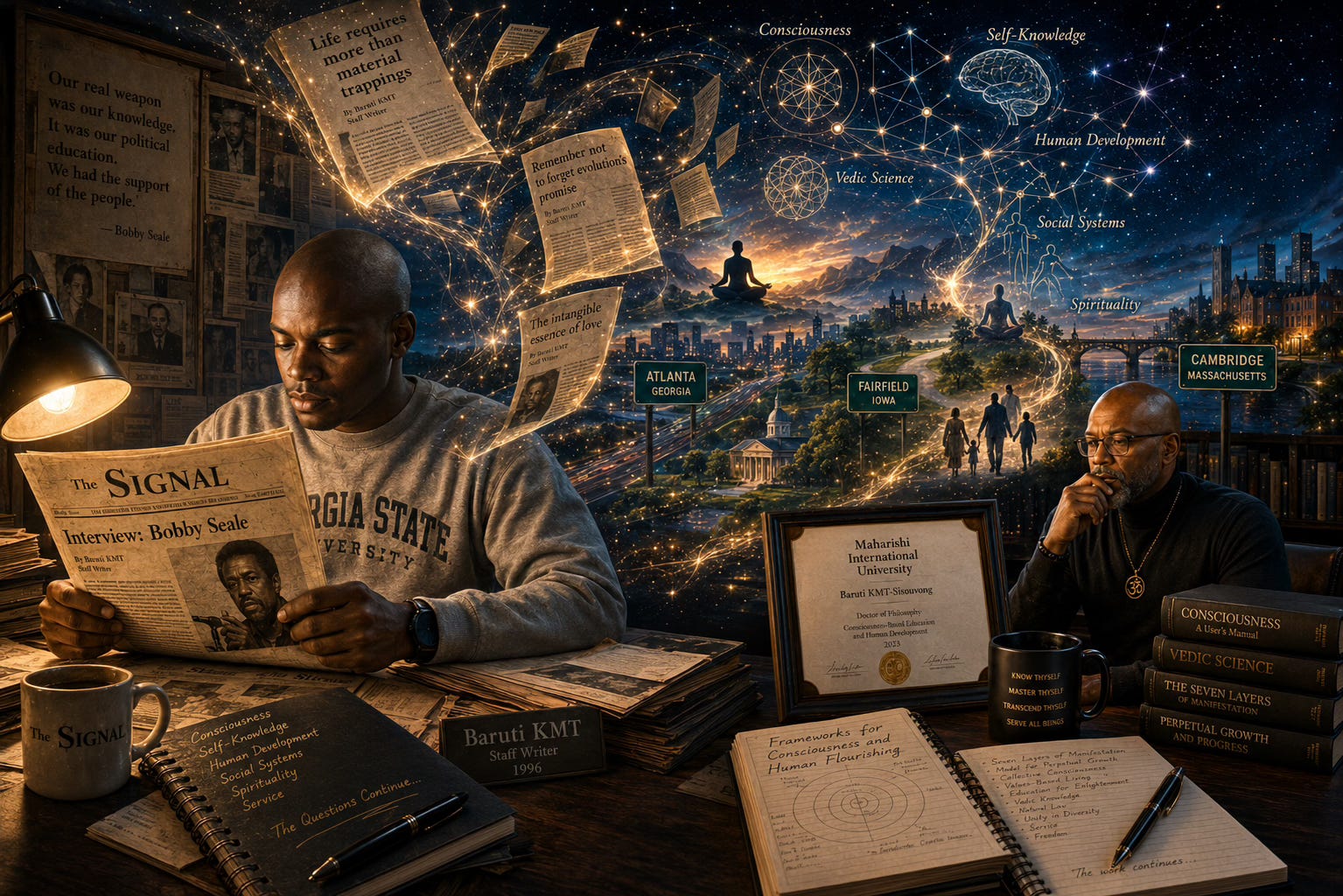
This piece emerged unexpectedly after I discovered a digital archive of essays I wrote as an undergraduate for The Signal, the student newspaper at Georgia State University between 1996 and 1997.
What began as a casual search quickly became something far more reflective. As I read through the essays, I recognised not only the intensity and idealism of youth, but also the early emergence of many themes that continue to shape my work today—consciousness, human development, social systems, transcendence, ethics, and the enduring question of what it means to become more fully human.
This essay is not merely about nostalgia or archival discovery. It is about continuity. It is about the often-unseen relationship between the questions we ask early in life and the paths those questions eventually carve for us through time.
Most importantly, it is about the importance of remaining true to one’s authentic intellectual and creative voice, even when that voice does not neatly align with prevailing expectations or categories.
Looking back now, I realise the signal was already there.
—Baruti KMT-Sisouvong, PhD
One recent afternoon and on a lark, I searched for my undergraduate essays from The Signal, the student newspaper at Georgia State University.
I was not sure I would find them. Yet there they were.
Perhaps I should have known they would be located; particularly so given many of the early newspapers have been, or are being, digitised for posterity and the benefit of researchers.
Grainy PDF scans from 1996 and 1997 carrying the thoughts of a younger version of myself who, unbeknownst to him, had already begun asking the questions that would shape the next three decades of his life. The pages appeared worn by time and perfectly preserved, and the ideas themselves also remained intact as penned all those years ago. Reading them felt less like discovering old writing and more like encountering a voice that had travelled alongside me all these years, waiting for the proper moment to reintroduce itself.
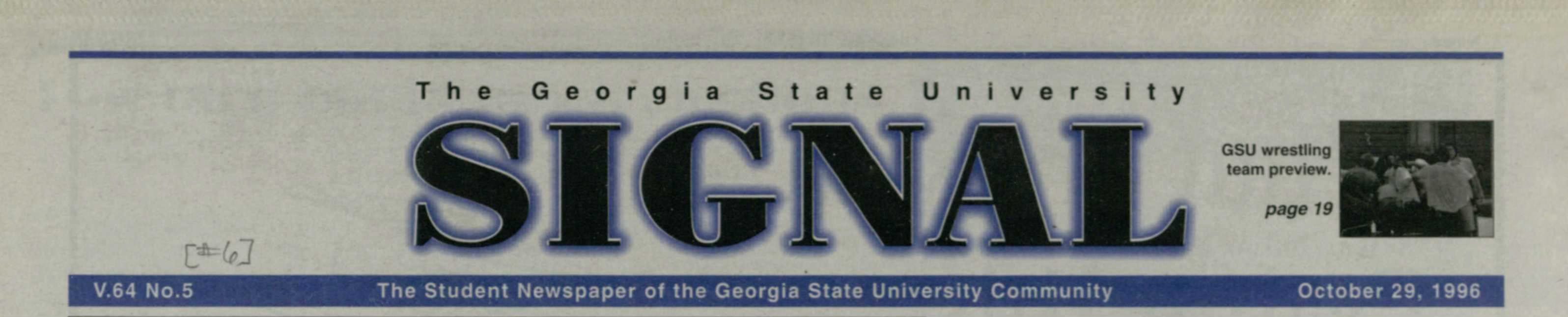
What struck me immediately was not embarrassment, though there were certainly moments that revealed the earnest intensity of youth. Nor was it nostalgia in the conventional sense. What intrigued me most was continuity.
The themes were already there.
Questions concerning consciousness. Reflections on self-knowledge. Meditations on relationships, social systems, race, beauty, spirituality, ethics, and human development. The language was less refined than it is now, certainly, but the underlying signal was unmistakable. Even then, I seemed less interested in merely describing events than in interrogating the unseen assumptions beneath them. But let me backup.
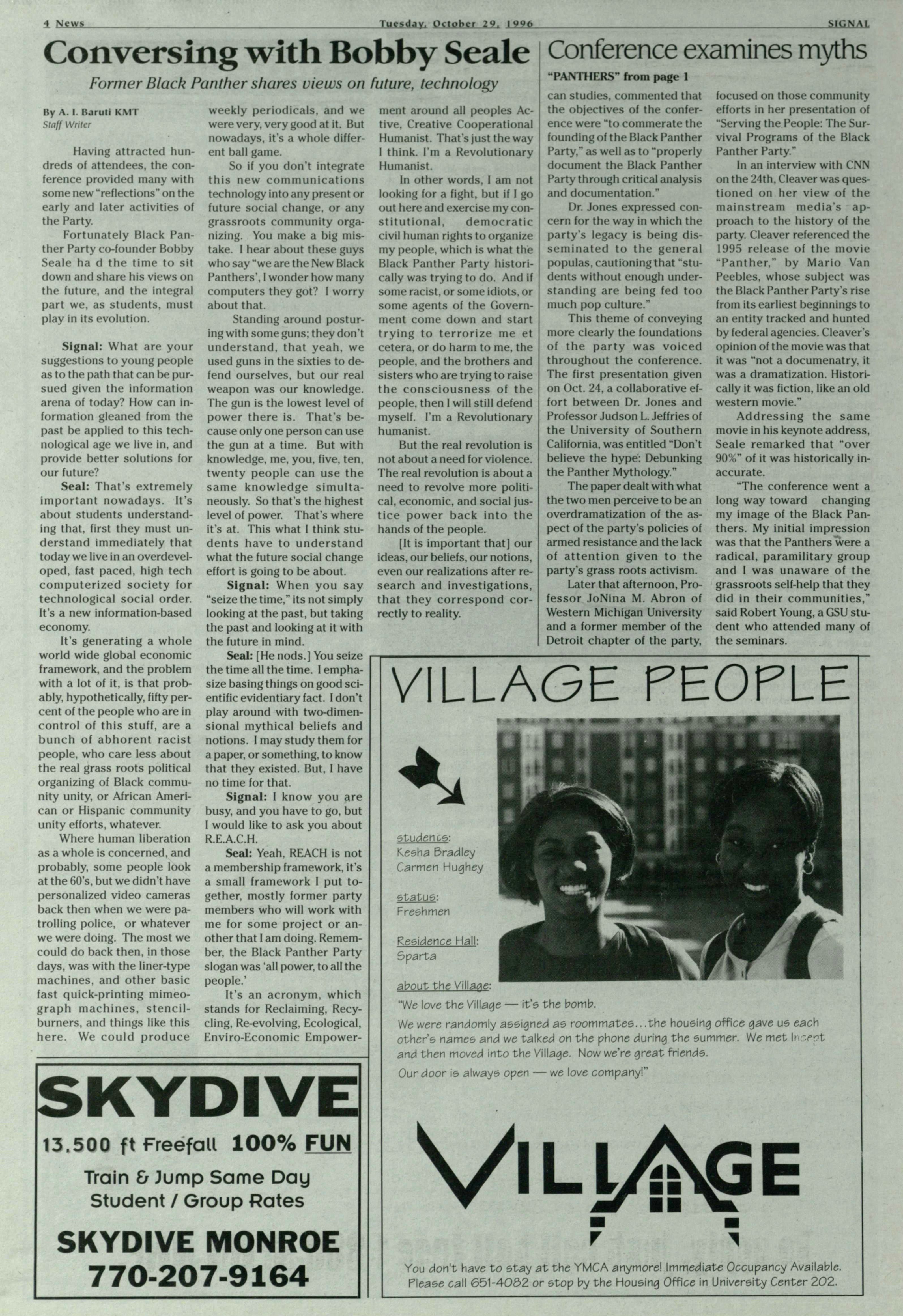
Presumably, the invitation from the Editor to pen pieces for the Opinions section was a result of having interviewed Bobby Seal, Founder of the Black Panther Party for Self Defense, during his visit to campus. The then Chair of the Department of African American Studies—Dr. Charles Jones—asked me to sit with Mr. Seal. I agreed. And as Nature would have it, I conducted the interview and would go on to Minor in African American Studies. As for my exchange with Bobby Seal, the conversation was filled with history, a little humour, and reflections on the journey from his time in California and much of what had occurred in between. It was a highlight of my Fall Quarter.
As I read through those essays, I found myself laughing softly at certain turns of phrase and smiling at the ambitious certainty of a young undergraduate writer attempting to understand the world while simultaneously attempting to understand himself. Yet beneath the amusement emerged a deeper recognition: the work had not suddenly appeared in adulthood. It had roots. Deep roots.
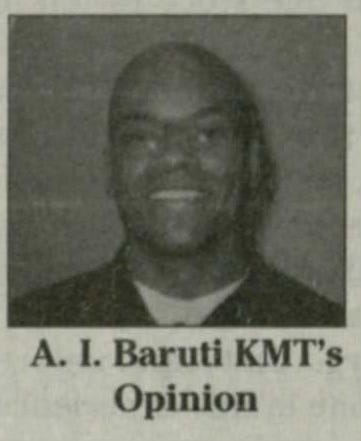
Many of us speak about “finding our voice” as though it emerges fully formed at some dramatic moment in life. But perhaps voice is less often discovered than protected. Perhaps it exists early, subtly attempting to announce itself long before we possess the courage, training, or life experience necessary to fully embody it.
At the time, however, I did not possess such clarity.
I was simply a student writing essays for a university newspaper.
As I recall, the relationship between my work and the publication eventually reached an inflection point. The editor desired that my writing become more “journalistic” in style and orientation. It was not an unreasonable request. After all, The Signal was a newspaper, not a philosophical journal. Yet even then, something within me resisted narrowing the work into purely conventional reporting.
I was less interested in simply recounting events than in exploring meaning.
For me, meaning mattered far more than events. For questions of meaning may be engaged again, and again across time. Whereas events of the moment, are encapsulated in time. Some may be mined later for new insights, yet the pieces with deeper meaning, they may be examined for far longer. In some cases, even generations down with line.
I now understand that the tension was not truly about competence or disagreement. It was about orientation. The publication understandably required a certain mode of writing, while my instincts continually pulled elsewhere—toward synthesis, contemplation, and inquiry. I wanted to examine not merely what people did, but why they believed what they believed. I wanted to understand how consciousness shaped society and how society, in turn, shaped our understanding of consciousness itself.
Eventually, that chapter closed.
At the time, I did not experience the moment as tragic. It was simply one of life’s many exits. Yet looking back now, I realise something important occurred in that transition. In stepping away rather than forcing myself entirely into a mould that did not fit, I unknowingly preserved an essential aspect of my intellectual and creative identity.
That preservation would matter enormously later.
Life, of course, continued moving.
The years that followed carried me through experiences both beautiful and difficult. I learned to meditate under an ancient tradition. I relocated, worked, taught, and continued to study traditions both ancient and modern. I encountered people whose presence altered the trajectory of my thinking. I continued meditating, reflecting, and writing—though not always publicly and not always consistently.
At various moments, the path ahead appeared fragmented. There were seasons where practical responsibilities overshadowed intellectual aspirations. Seasons where survival itself became the dominant concern. Yet even during those periods, the underlying questions never fully disappeared.
If anything, they deepened.
Why do human beings suffer unnecessarily? What lies beneath the structures we inherit? What is consciousness? How does one cultivate meaningful development? What does it mean to evolve as a human being without abandoning one’s humanity? What unseen forces shape the societies we construct? How might inner transformation alter outer outcomes?
Over time, those questions ceased being abstract curiosities and became the organising architecture of my life’s work.
Eventually, that trajectory led me westward to Maharishi International University, where I resumed graduate study in Vedic Science after a few years away from academia. In many ways, returning to graduate school felt less like beginning something new and more like rejoining a conversation that had been unfolding internally for decades.
There is a peculiar feeling that accompanies returning to one’s vocation after a prolonged detour. One simultaneously feels both behind and precisely on time.
At MIU, the disparate intellectual threads of my earlier years began weaving themselves into a more coherent tapestry. The very themes that had surfaced in those undergraduate essays—consciousness, human potential, social development, transcendence, self-knowledge—now found themselves situated within a broader philosophical and scientific framework.
The younger writer who once penned reflective essays for a university newspaper could not have fully imagined where those questions would eventually lead.
Nor could he have anticipated the years of meditation instruction that would follow. Or serendipitously meeting the woman, Mina, who would later become my partner in all things good and righteous. The family we would consciously create. The thousands of individuals my wife and I would eventually teach through the Transcendental Meditation® programme in Cambridge and Greater Boston. Or the development of frameworks such as the Seven Layers of Manifestation and the Model for Perpetual Growth and Progress. Or the long nights of doctoral research exploring mystical experiences among Freemasons. Or the eventual completion of a dissertation and the conferral of a PhD in 2023.
Yet the seeds were already there.
That is what moved me most while reading those archived essays.
Not that the younger version of myself possessed all the answers. Far from it—trust me on that one. Rather, it was the recognition that he was already asking the right questions.
There is comfort in that realisation.
In a society that often rewards conformity over authenticity, many people gradually lose contact with the early signals emerging from within themselves. They become fluent in performance while drifting further away from vocation. The external rewards may increase, yet the internal resonance weakens.
Sometimes this occurs because survival demands compromise, institutions subtly train individuals toward intellectual safety, and repeated dismissal convinces people to distrust their own instincts. And at other times, because the world simply lacks the language to understand unconventional synthesis when it first appears.
Had I fully abandoned that earlier voice in favour of strict conformity, I now wonder what might have been lost.
Would the later work have emerged at all?
Would the frameworks, essays, teachings, and inquiries that now define my work have survived beneath the pressures of adaptation?
I do not ask these questions out of arrogance, but out of sincere reflection regarding the delicate relationship between authenticity and development. There are moments when adaptation is necessary for growth. Yet there are also moments when preserving one’s deeper orientation becomes equally necessary.
Wisdom often lies in discerning the difference.
As I continued reading through those old newspaper scans, another feeling emerged alongside the nostalgia and reflection: gratitude.
Gratitude that the essays survived.
Gratitude that digital archives now make possible forms of intellectual archaeology previously unavailable to ordinary people. Gratitude that a younger version of myself left breadcrumbs for the older one to rediscover. Gratitude that the voice, though refined and expanded through experience, fundamentally remained intact.
The essays now function as more than youthful writings preserved in PDF format. They stand as documentary evidence of continuity across time.
The continuity matters because life can sometimes create the illusion of fragmentation. Careers shift. Geographies change. Financial contractions occur. Relationships evolve. Institutions disappoint. New opportunities emerge. Entire chapters begin and end with startling abruptness. Amid all of this movement, it becomes easy to imagine that we ourselves have become unrecognisable.
Yet occasionally, if fortunate, we encounter evidence to the contrary.
A forgotten journal, an old photograph, a letter, a recording, or in my case, grainy newspaper essays from 29 October 1996 and 11 March 1997.
And suddenly the years collapse inward.
The younger self and the older self recognise one another across time and space.
Not perfectly. Not completely. But enough.
Enough to realise that beneath the changing circumstances, alongside the successes and disappointments, and despite the exits and returns, something essential endured—the signal never stopped.
It simply continued travelling across time until I was finally able to hear it clearly and respond appropriately.
Suggested Practice
Set aside thirty uninterrupted minutes and revisit a piece of your earlier self.
It may be:
an old journal,
a forgotten essay,
an email,
a photograph,
a poem,
an unfinished project,
or even a social media post written years ago.
As you encounter that earlier version of yourself, resist the temptation to judge the work solely through the lens of refinement or maturity. Instead, ask:
What themes were already emerging?
What questions seemed to persist beneath the surface?
What concerns, hopes, or curiosities have remained consistent across time?
Where did I silence myself in order to fit expectations?
Where did I remain true to my deeper voice?
Then sit quietly for several minutes and consider this possibility:
Perhaps the person you are becoming has been attempting to speak to you for far longer than you realised.
Listen carefully for the signal that remained.
—
About the Author
Dr. Baruti KMT-Sisouvong is a scholar of consciousness, researcher of human development, and Certified Teacher of Transcendental Meditation® based in Cambridge, Massachusetts. His work explores the relationship between Pure Consciousness, neuroscience, and social systems, and how deeper awareness can inform both personal growth and institutional transformation.
He is the Founder and Chief Meditation Officer of Transcendental Brain, an initiative examining the intersection of consciousness research, cognitive science, and high-performance decision-making. He is also President of Serat Group Inc. and Founder and Director of Radical Scholar Inc., a nonprofit dedicated to consciousness-based research and public scholarship.
Alongside his wife and teaching partner Mina, he co-directs the Transcendental Meditation program for Cambridge and the Greater Boston area. He is also the host of the On Transcendence Podcast and Founder of International Meditation Hour, a quarterly global gathering dedicated to the unifying power of silence.
His writings—spanning frameworks such as The Model for Perpetual Growth and Progress and The Seven Layers of Manifestation—explore the evolving relationship between consciousness, leadership, and society.
He writes from the conviction that the most important race is not between nations or machines, but between the conditioned mind and the awakening soul.
To learn more about him, visit: https://barutikmtsisouvong.com/.