


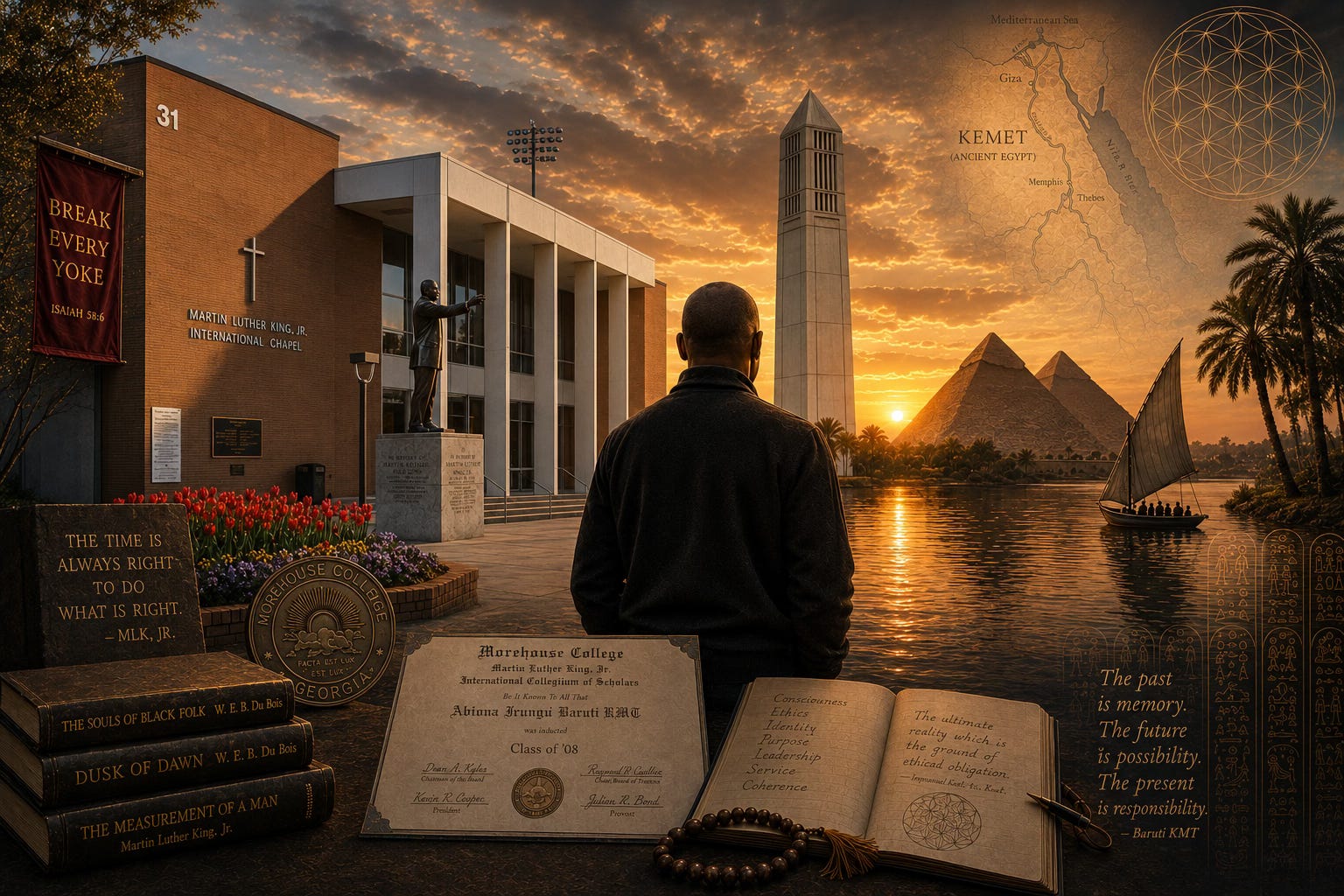
Author’s Note
This reflection emerged unexpectedly.
What began as a contemporary discussion regarding the legacy of Dr. W.E.B. Du Bois gradually opened a deeper stream of memory concerning mentorship, intellectual lineage, spirituality, and the long search for coherence that has shaped much of my life’s work.
As I reflected upon Du Bois, I found myself simultaneously reflecting upon Dr. Asa G. Hilliard, III, Dr. Charles S. Finch, III, Dean Lawrence Edward Carter, Sr., Morehouse College, Georgia State University, Radical Scholar, and the many conversations and experiences which helped form my understanding of consciousness, ethics, and human development over the past three decades.
This essay is not intended as autobiography for autobiography’s sake. Rather, it is an attempt to honour the individuals, institutions, and traditions that helped cultivate within me the conviction that intellect divorced from ethics becomes dangerous, spirituality disconnected from reason becomes unstable, and human development requires the integration of mind, heart, and consciousness.
Increasingly, I believe many people are searching for pathways beyond fragmentation—pathways capable of restoring coherence within both the individual and society writ large.
This essay is offered in that spirit.
— Baruti KMT-Sisouvong, PhD
There are moments in life which, when first encountered, appear isolated and disconnected. One meets a teacher. One travels to a distant land, reads a book, enters a room, a tradition, or a conversation not fully understanding that, years later, these seemingly disparate encounters will reveal themselves as part of a larger architecture subtly shaping the trajectory of one’s life.
Only with time does one begin to perceive the continuity beneath the events.
Recently, during an online discussion regarding the new PBS documentary on Dr. W.E.B. Du Bois, I found myself reflecting upon my connection to Morehouse College, Dean Lawrence Edward Carter, Sr., Dr. Asa G. Hilliard, III, Dr. Charles S. Finch, III, and the long arc of intellectual and spiritual enquiry that has guided my life for nearly three decades. What began as a simple exchange regarding the value of discussing Du Bois within a space dedicated primarily to physical fitness unexpectedly stirred memories of another time in my life—a time when questions surrounding identity, consciousness, ethics, spirituality, and human development first began cohering into something more deliberate.
It caused me to reflect not merely on Du Bois himself, but upon lineage.
Not lineage in the narrow genealogical sense, but intellectual lineage. Spiritual and ethical lineage that encompasses the transmission of ideas, obligations, questions, and aspirations from one generation to another.
And as I reflected, I realised that my own connection to Morehouse College was never simply institutional. It was initiatory.
In 1996, during my undergraduate years, I was initiated into KMT Asen—an African Order founded at Morehouse College in 1988. That same summer, I travelled to Egypt alongside Dr. Asa G. Hilliard, III aka “Baba”—a towering scholar at my Alma Mater—Georgia State University—whose work unapologetically shaped African-centered educational thought and the understanding of ancient Kemet’s contributions to civilisation. To walk the land of Kemet alongside Hilliard was not merely academic travel. It was immersion into a civilisational memory too often obscured beneath the sediment of modern historical fragmentation.
Egypt altered me.
Not because it provided simplistic answers, but because it intensified my questions.
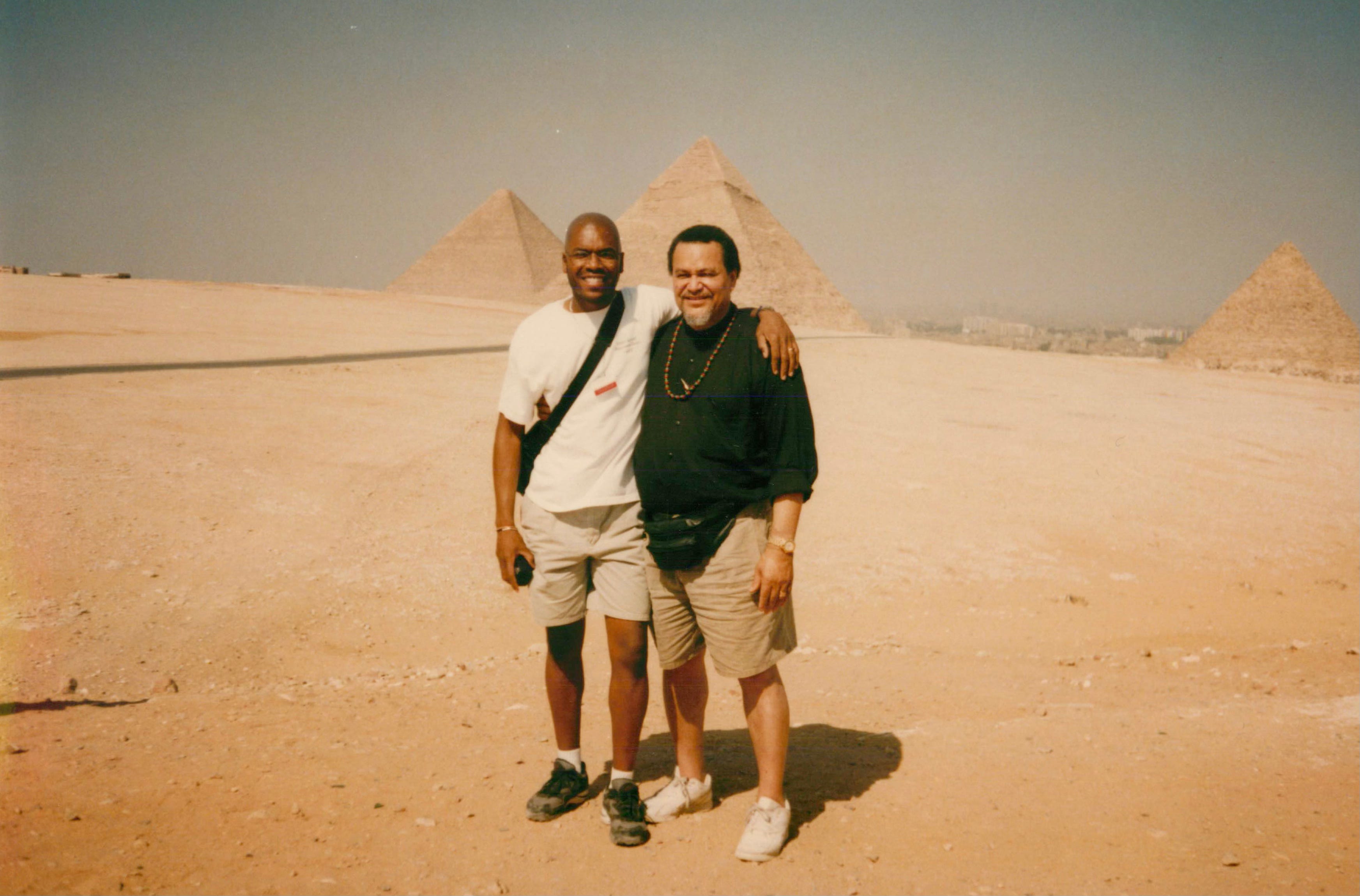
Standing amidst monuments built thousands of years ago by minds possessing extraordinary symbolic, mathematical, architectural, and spiritual sophistication, I found myself confronting a reality larger than the narrow intellectual frameworks often presented within conventional education. One begins to ask different questions in such places. Questions about consciousness, human potential, memory, and about what humanity once understood—and perhaps long since forgotten.
That same year, I met Dean Lawrence Edward Carter, Sr.—inaugural Dean of the Martin Luther King International Chapel at Morehouse College.
To say Dean Carter became a mentor would be true, albeit insufficient. What he offered was not merely guidance, but orientation. At a moment when my intellectual curiosity was increasingly turning toward mysticism, spirituality, ethics, and the deeper dimensions of human existence, Dean Carter recognised the seriousness of my enquiry and took me under his wing.
He has remained a source of encouragement in my quest ever since.
What struck me immediately about Dean Carter was his refusal to fragment human development into disconnected compartments. Within him existed a rare synthesis: scholar, theologian, ethicist, spiritual thinker, public intellectual, and moral steward. Through his work at the Martin Luther King, Jr. International Chapel at Morehouse College, he cultivated spaces where spirituality and intellect were not treated as adversaries, but as partners in the development of the whole human being.
That mattered to me deeply.
Even then, I sensed that many of the crises facing modern society stemmed from fragmentation: the separation of intellect from ethics, achievement from meaning, power from wisdom, identity from consciousness itself, and scholarship from lived humanity.
Dean Carter represented another possibility.
Over time, our relationship strengthened. When I later founded Radical Scholar, Inc. in October 2006—a nonprofit organisation dedicated to fostering dialogue between various thought communities around the world—Dean Carter graciously agreed to serve on the original Board alongside Dr. Asa G. Hilliard, III and Dr. Charles S. Finch, III. Additionally, after settling here in Cambridge in 2013, I had the pleasure of recommending Dean Carter as the keynote speaker for the 2014 Masonic Academic Convocation held at Grand Lodge of Massachusetts. And as usual, Dean Carter hit the ball out of the park.
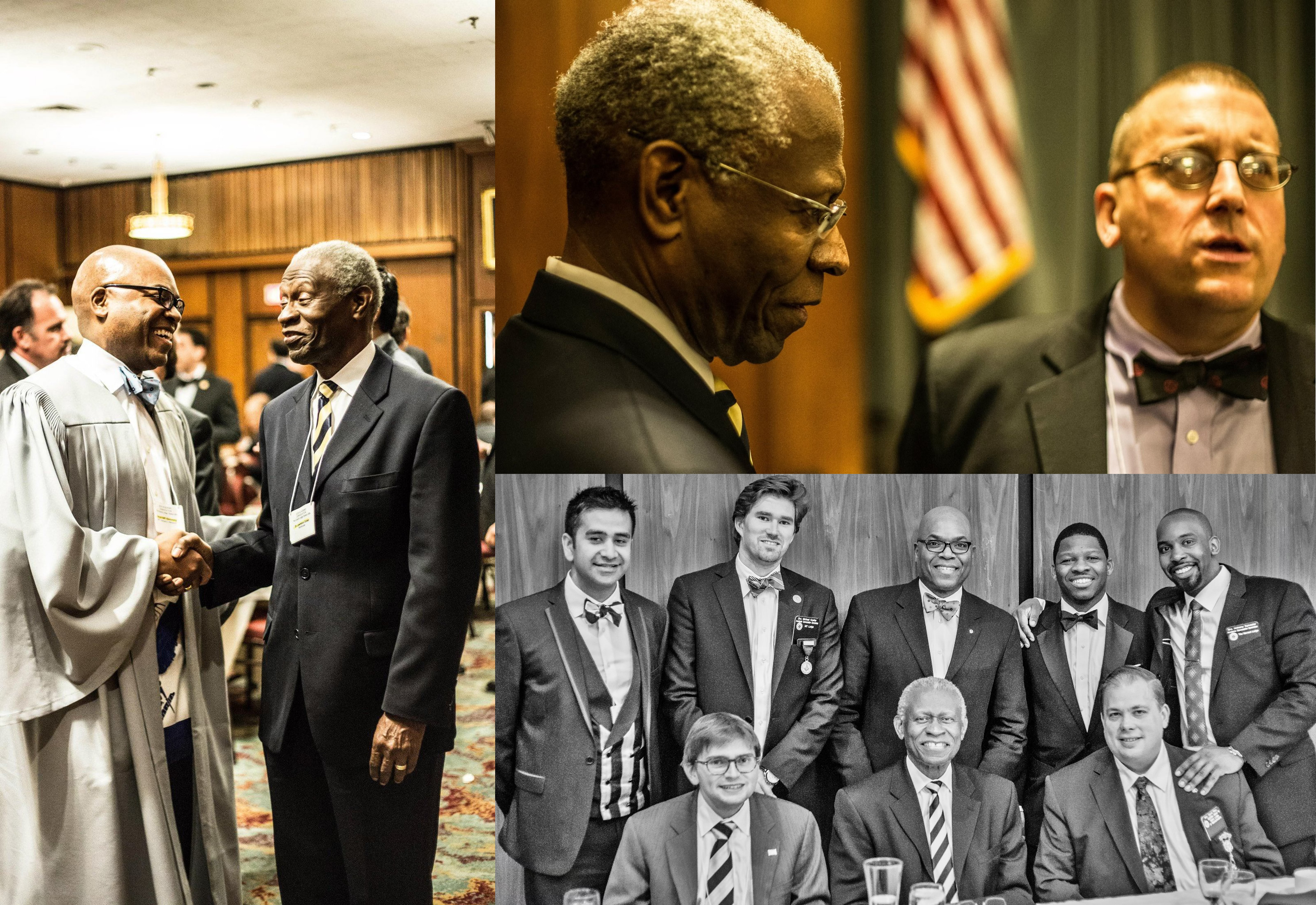
Looking back now, I recognise how extraordinary that constellation truly was.
Hilliard.
Finch.
Carter.
Three men, each in their own way, committed to restoring coherence where modernity had produced fragmentation.
Through Radical Scholar and our radio programme, Connecting the Dots, I sought to create a space where spirituality, science, philosophy, consciousness, history, and world affairs could exist within meaningful dialogue rather than disciplinary isolation. Even the title itself—Connecting the Dots—now feels prophetic in retrospect. The work was always about synthesis and coherence.
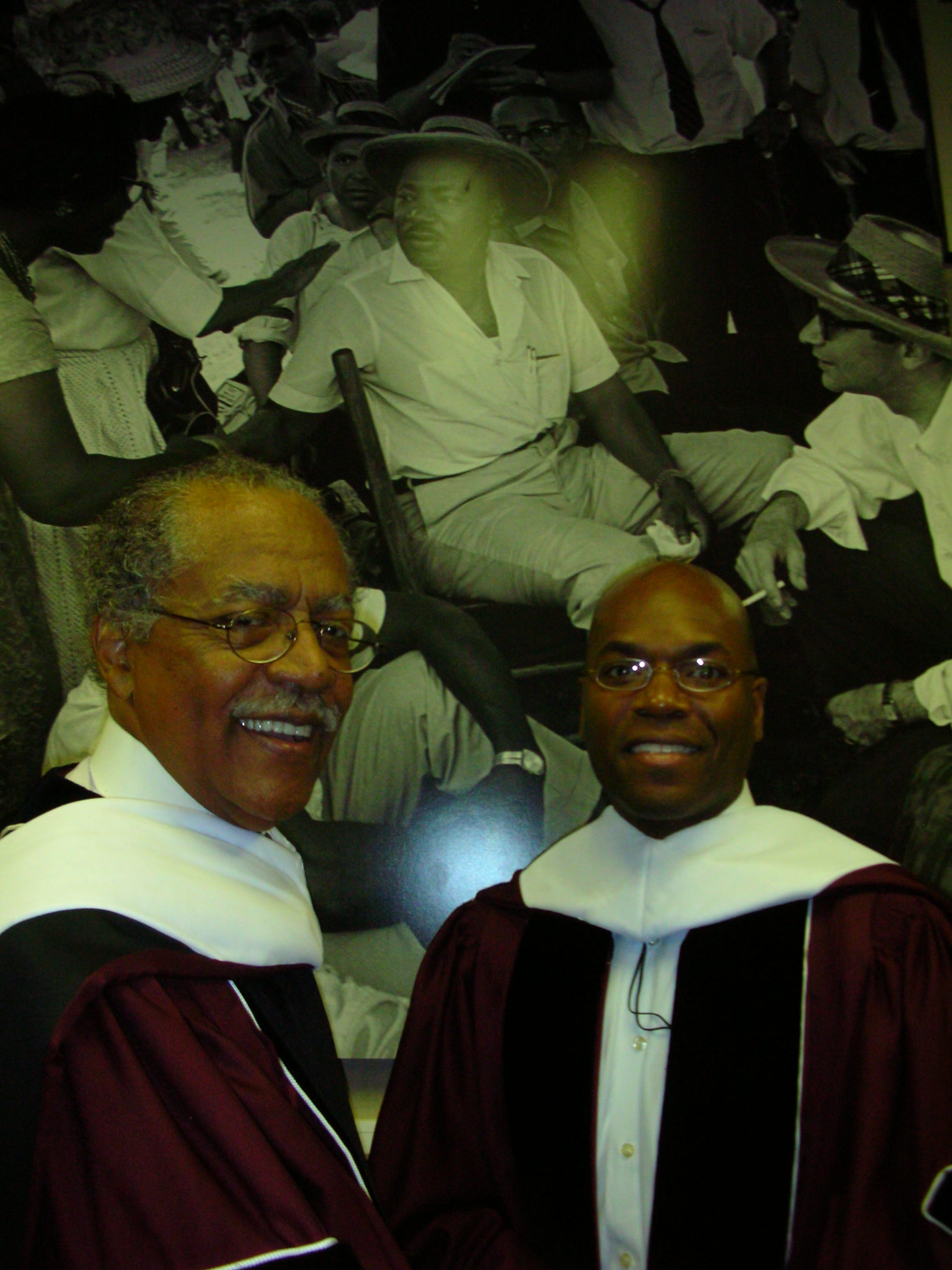
In April 2008, I was inducted into the Martin Luther King, Jr. International Collegium of Scholars at Morehouse College. The induction occurred during Morehouse’s 141st Annual Science and Spirituality Awareness Week and the Gandhi-King-Ikeda-Hassan Perennial Season of Nonviolence and twenty-two days ahead of my learning Transcendental Meditation in Fairfield, Iowa at Maharishi International University as part of their David Lynch Visitors Weekend that year.
I still remember the atmosphere of those days.
The intellectual energy, moral seriousness, and the sense that ideas mattered because human beings mattered.
Reverend Samuel Billy Kyles, who stood beside Dr. King during his final hour in Memphis, delivered a sermon titled “I Was There To Be a Witness.” Matthew Fox lectured on the contemporary significance of The Black Madonna. A portrait honouring Asa Hilliard was unveiled. The event’s theme was “A Spiritually Engaged Global Ethical Education.”
Even now, reading those words again stirs something within me.
A spiritually engaged global ethical education.
That phrase contains, in many ways, the essence of what I have sought across the decades.
Not merely education, spirituality, or even ethics. For me, it was about integration.
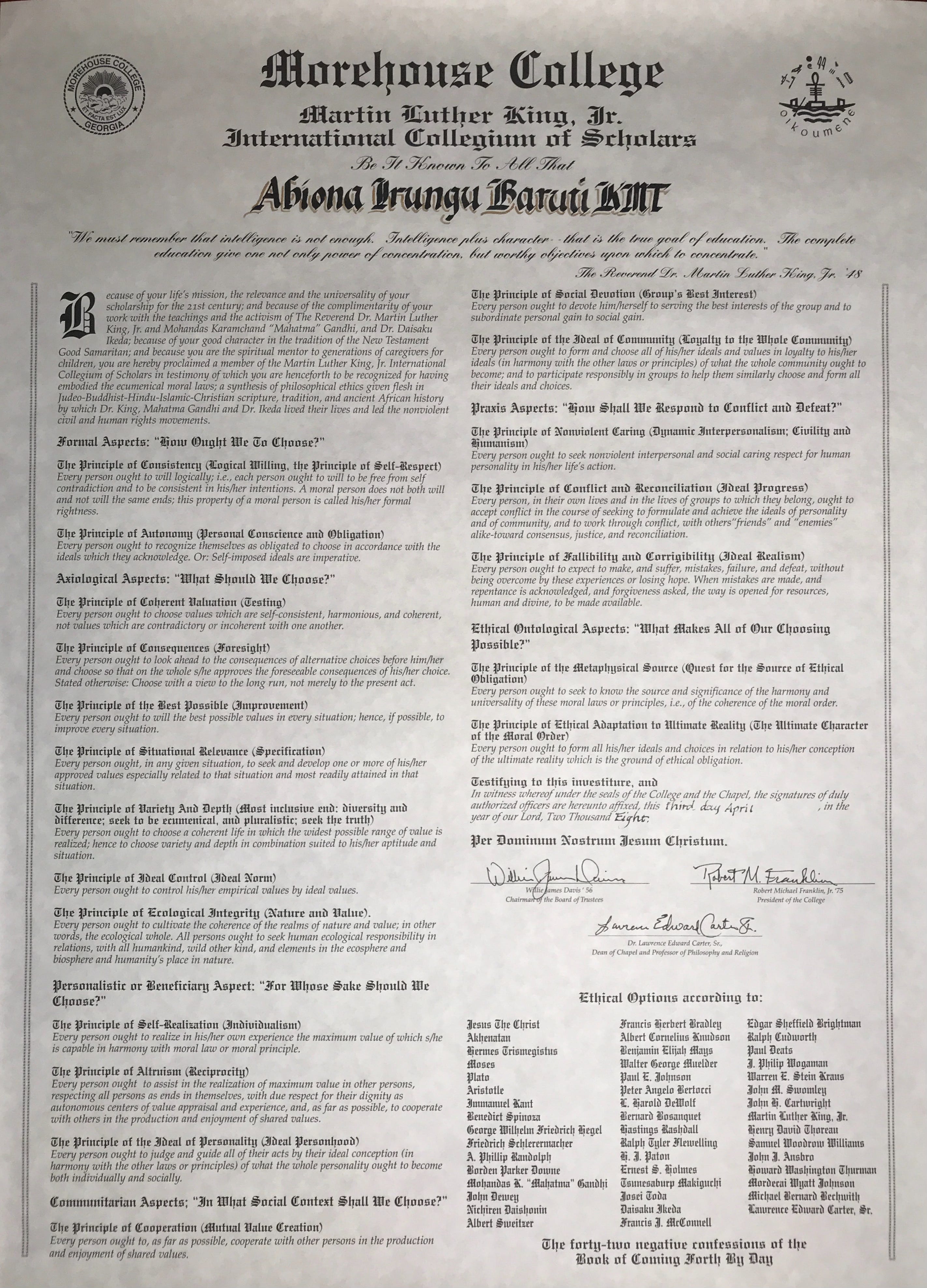
The diploma itself remains among the more meaningful recognitions I have ever received—not because of prestige, but because of the charge embedded within it. Members of the Collegium were called to sustain ethical and spiritual leadership within society and to serve as moral and intellectual role models for future generations.
That responsibility never fully leaves you once accepted consciously. Nor should it.
Later that month, my journey led me to learn Transcendental Meditation and to Maharishi International University that Fall, where I pursued advanced study in Vedic Science and later completed doctoral research exploring mystical experiences among Freemasons. At first glance, some may perceive these paths as unrelated to my earlier experiences within KMT, with faculty at Morehouse while I was a student across town at Georgia State University, or African-centered scholarship. Yet from my perspective, the connective tissue remained remarkably consistent. So much so, I am of the mind that, not unlike President John F. Kennedy said of his Honorary degree from Yale that “It might be said now that I have the best of both worlds, a Harvard education and a Yale degree.”
For me, it was two degrees from Georgia State University along with the first leg of graduate education and a Morehouse Collegium of Scholars Induction Diploma for my early work with Radical Scholar. Like President Kennedy, I too have the best of both worlds.
As for the underlying questions that brought me to that moment in 2008, they never changed. They are:
What is consciousness?
How do human beings evolve psychologically, ethically, and spiritually?
What conditions cultivate coherence rather than fragmentation?
How does one align intellect, morality, perception, and action?
How might humanity move toward greater integration rather than deeper division?
The frameworks evolved. The enquiry endured.
And perhaps that is why one of the more moving moments of my academic life occurred in 2023 during my doctoral defense, when Dean Carter attended virtually via Zoom and offered reflections following the presentation.
Nearly three decades had passed since our initial meeting.
Think about that for a moment.
A young man searching for meaning and coherence in 1996 encounters a mentor devoted to the ethical and spiritual development of humanity. Decades later, that same mentor witnesses the culmination of a doctoral journey exploring consciousness, mysticism, and human transformation.
There was something deeply symmetrical about that moment.
Not performative or sentimental. Simply real.
A continuity of enquiry across time.
Today, as I continue developing frameworks such as the Seven Layers of Manifestation and the Model for Perpetual Growth and Progress, I increasingly recognise how deeply these earlier encounters shaped my orientation toward knowledge itself.
I no longer believe fragmented thinking can solve the crises produced by fragmentation.
We cannot adequately address social deterioration while severing ethics from intellect. Nor can we meaningfully discuss leadership while neglecting consciousness any more than we can cultivate healthy societies while ignoring psychological and spiritual development. And, finally, we cannot truly educate human beings if we teach them only how to make a living while failing to teach them how to live.
That understanding did not emerge overnight.
It was cultivated across years of mentorship, study, travel, meditation, scholarship, struggle, observation, and reflection. It was shaped in conversations with Dean Carter. In the scholarship of and conversations with both Dr. Asa G. Hilliard, III and Dr. Charles S. Finch, III. In the shadow of the pyramids of Kemet, the intellectual traditions of Morehouse College to which I have been privy as a non-student via Dean Carter, in the silence of meditation, and the disciplined enquiry of doctoral research.
And perhaps most importantly, it was shaped by recognising that wisdom traditions across cultures often point toward the same essential truth:
Human beings flourish when consciousness, ethics, intellect, and action move into greater alignment.
That alignment remains imperfect. It is aspirational rather than absolute. Yet the aspiration itself matters.
In many ways, that is why the recent discussion surrounding Du Bois resonated so deeply with me. To some, the matter may have appeared trivial—a disagreement regarding moderation policy within an online community. Yet beneath the surface existed a larger question:
What kinds of conversations are necessary for the development of whole human beings?
Du Bois understood the importance of that question.
So did King, Hilliard, Finch, and certainly Dean Carter.
And increasingly, I believe many others are searching for spaces willing to hold these conversations again.
Not merely spaces for performance, outrage, and consumption, but spaces where intellect, humanity, reflection, and ethical enquiry still matter.
Spaces where people are permitted to seek coherence.
If I have learned anything across this long and often winding journey, it is this:
The teachers who most meaningfully shape us are rarely those who merely provide information. They are those who help us recognise the deeper continuity beneath our questions and encourage us to continue the search with integrity.
For that gift, I remain eternally grateful.
Suggested Reflection
Take a moment to reflect upon the individuals, traditions, books, experiences, or places that ultimately shaped the deeper contours of your life.
Not merely the moments that advanced your career or social standing, but those encounters that altered the way you understood yourself, humanity, ethics, consciousness, or purpose.
Ask yourself:
Who helped shape the questions I continue asking today?
Which experiences initiated deeper transformations within me?
What intellectual, spiritual, or moral lineages am I consciously—or unconsciously—carrying forward?
In what ways have mentorship and guidance influenced the direction of my life?
Am I living in a manner that integrates intellect, ethics, and humanity, or have these dimensions become fragmented within me?
If possible, spend a few moments in silence afterward.
Observe what memories surface, which names arise naturally, and what remains unresolved, unfinished, or still unfolding.
Sometimes the deeper meaning of our lives is found not in isolated accomplishments, but in recognising the continuity connecting the people, questions, and experiences that shaped our becoming.
—
About the Author
Dr. Baruti KMT-Sisouvong is a scholar of consciousness, researcher of human development, and Certified Teacher of Transcendental Meditation® based in Cambridge, Massachusetts. His work explores the relationship between Pure Consciousness, neuroscience, and social systems, and how deeper awareness can inform both personal growth and institutional transformation.
He is the Founder and Chief Meditation Officer of Transcendental Brain, an initiative examining the intersection of consciousness research, cognitive science, and high-performance decision-making. He is also President of Serat Group Inc. and Founder and Director of Radical Scholar Inc., a nonprofit dedicated to consciousness-based research and public scholarship.
Alongside his wife and teaching partner Mina, he co-directs the Transcendental Meditation program for Cambridge and the Greater Boston area. He is also the host of the On Transcendence Podcast and Founder of International Meditation Hour, a quarterly global gathering dedicated to the unifying power of silence.
His writings—spanning frameworks such as The Model for Perpetual Growth and Progress and The Seven Layers of Manifestation—explore the evolving relationship between consciousness, leadership, and society.
He writes from the conviction that the most important race is not between nations or machines, but between the conditioned mind and the awakening soul.
To learn more about him, visit: https://barutikmtsisouvong.com/.
I really appreciated reading about your journey and the questions and people that enlivened your search for meaning and full integration. I often tell my students that I wish to attend to all aspects of their being as it pertains to their mind, body, and spirit. We must continue to excavate and make legible this tradition of meaning making in our communities. Keep holding it down my brother. Oneheart!